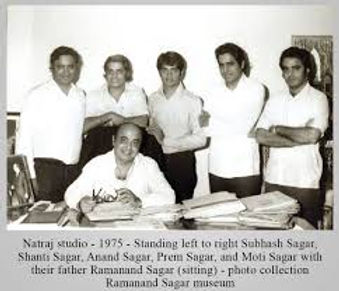
MOTI SAGAR

Moti Sagar, born on 16 July 1947, is one of the most respected and influential creative figures in Indian cinema and television, a storyteller whose work has shaped the cultural and spiritual imagination of generations. The youngest son of legendary filmmaker Ramanand Sagar, Moti Sagar grew up immersed in a world of epic narratives, disciplined storytelling, and a deep reverence for Indian mythology and history. Over a career spanning several decades, he has carried forward and expanded this legacy with distinction, contributing decisively to both the golden era of Hindi cinema and the evolution of Indian television.
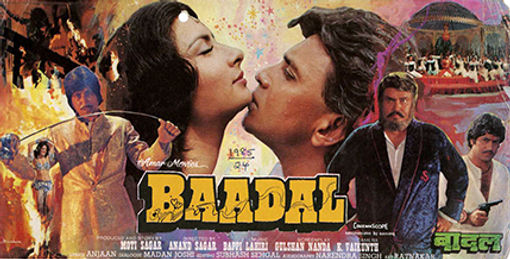
He began his creative journey in films during the late 1960s and 1970s, closely associated with notable Hindi motion pictures such as Ankhen (1968), Geet (1970), Charas (1976), Lalkar (1972), Badal (1985), Arzoo (1965), Armaan (1985), Ram Bharose (1977), National Award Winner - 1971 (2007) & many more . These formative years in cinema sharpened his narrative sensibilities and visual grammar, preparing him for a historic role in shaping Indian television.



With the advent of Doordarshan, Moti Sagar became instrumental in creating programming that transcended entertainment, transforming television into a medium of shared cultural experience. His work on landmark series such as Ramayan (1987) and Shri Krishna (1993) placed him at the epicentre of a phenomenon that united the nation across language, region, and belief. These productions did more than achieve unprecedented viewership—they redefined devotional storytelling and established mythological television as a powerful cultural force. In recognition of this extraordinary contribution to Indian audiovisual heritage.


Other hit shows like Dada Dadi Ki Kahaniyan (1986), Alif Laila (1993), Jai Ganga Maiya (1997), Aankhen (2001) set a precedent on the way stories started being told on television.


As satellite television expanded, he continued to create large-scale historical, mythological, and fantasy series that captivated new generations, including Dharti Ka Veer Yodha Prithviraj Chauhan (2006), Dharam Veer (2008), Aladdin – Jaanbaaz Ek Jalwe Anek (2007), Dwarikadheesh – Bhagwan Shree Krishna (2011), Meera (2009), Har Mushkil Ka Hal Akbar Birbal (2014), Swaminarayan (2009), Sai Baba Tere Hazaaron Haath (2005), and Jai Shri Krishna (2008) and many more across Star Plus, Zee TV, NDTV Imagine, Colors, and other leading networks. Each production reflected his enduring commitment to storytelling rooted in values, imagination, and scale.


Moti Sagar has been associated with projects honoured by the Dadasaheb Phalke Award, India’s highest recognition in cinema, among numerous other lifetime honours and accolades.
In a moment of profound symbolic significance, Moti Sagar was invited to Ayodhya for the historic inauguration of the Ram Mandir, acknowledging his lifelong association with the Ramayana tradition and the Sagar family’s unparalleled role in bringing the epic into the homes and hearts of millions. Today, Moti Sagar stands as a custodian of India’s storytelling heritage—an artist whose body of work bridges cinema and television, faith and history, tradition and modernity, leaving behind a legacy that continues to inspire Indian entertainment at its highest level.


The Sagar Legacy Carries On